
Thymalin Peptide
Thymalin is a polypeptide isolated from the thymus gland, believed by researchers to help regulate immune functions.(2) Studies have suggested that Thymalin, a naturally occurring polypeptide, is primarily found in the young epidermal cells of the thymus gland. With increasing age, the levels of Thymalin decrease, eventually becoming thinned out and non-uniform in nature.(5)
Natural thymic peptides such as Thymalin were first isolated from the thymus gland via a mild acid extraction process. Upon further isolation studies, the proposed immunomodulatory molecule composed by Thymalin (L-Glu-L-Trp) was discovered and researched. This dipeptide molecule in Thymalin may possibly play a role in the peptide mechanism.(4)
While both Thymalin and Thymulin are naturally occurring thymic factors, their mode of action is hypothesized by researchers to different, where Thymalin is a polypeptide that may regulate thymic functions at optimal levels, the Thymulin appears to be a zinc-dependent nonapeptide hormone that may possibly enhance the thymic functions in fighting T-cell suppression.
Overview
Studies have been conducted to understand the functioning of both natural and synthetic thymic peptides.(6) The main compounds that have been studied areThymalin (natural polypeptide), Thymogen (synthetic peptide) and Vilon (its derived dipeptide).
The study suggested that all the peptides within this thymic family appear to function via possibly stimulating thymic functions i.e., differentiation of T-cells, induced changes in the nucleotides and cytokine cells and secretion of lymphocytes. The other significant hypothesis made during this study was that the naturally occurring peptide, Thymalin, may potentially stimulate the antioxidant responses, whereas the two synthetic analogues did not appear to the researchers to alter these responses. Thymalin, being a natural extract, possibly exhibits a broader range of biological activities compared to its synthetic counterparts, Thymogen and Vilon. For instance, by potentially aiding in the reduction of oxidative stress, Thymalin might contribute indirectly to controlling inflammatory responses, which are typically exacerbated by oxidative damage.
Chemical Makeup
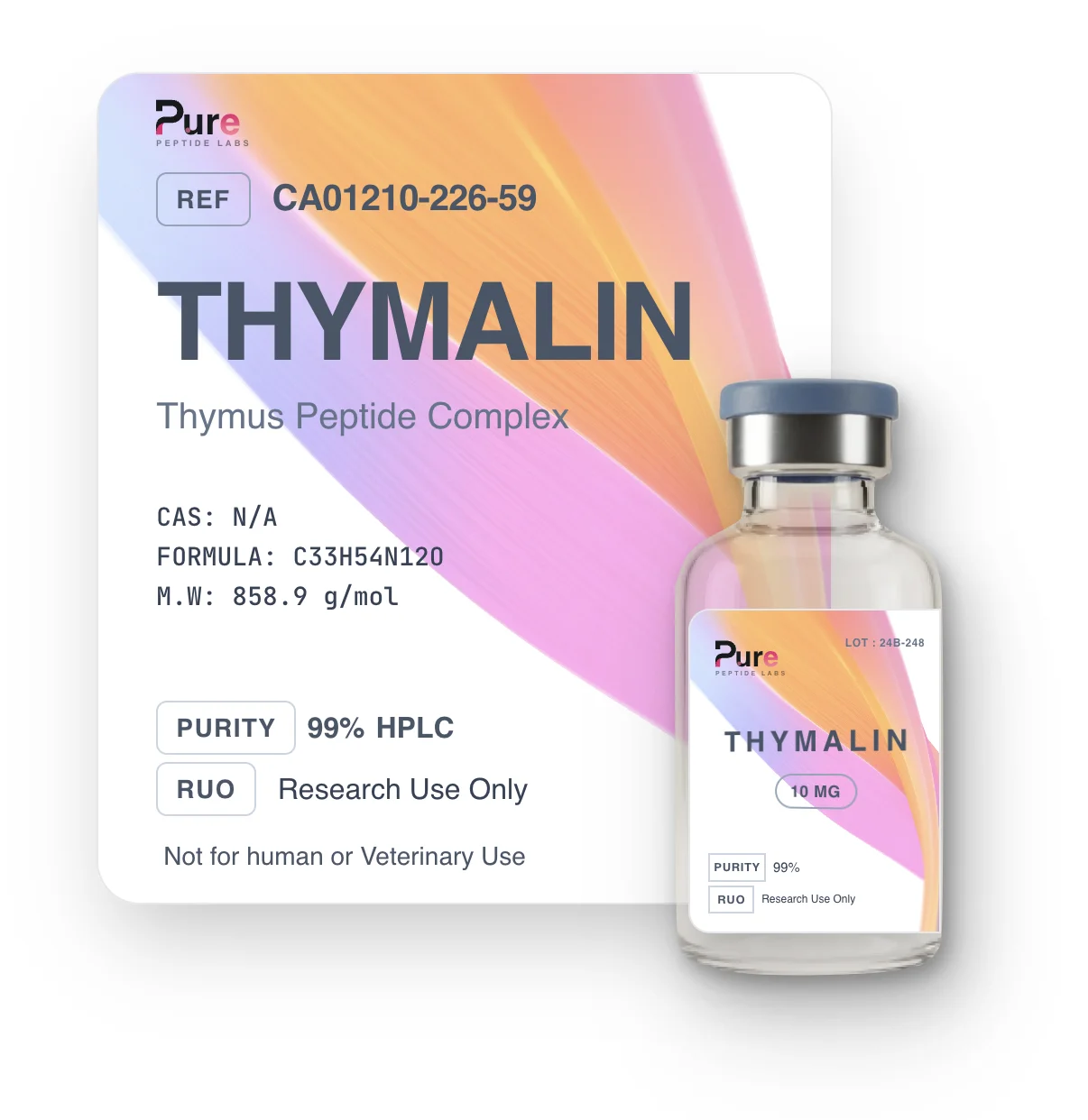
Molecular Formula: C33H54N12O15
Molecular Weight: 858.864 g/mol
Other Known Titles: Thymulin, Thymic Factor
Be the first to review “Thymalin”
Related products
Peptides
Peptides
General Health & Longevity
Peptides
Peptides
Peptides
Peptides
Reviews
There are no reviews yet.